Best AI model overall: ChatGPT (GPT-5.6)
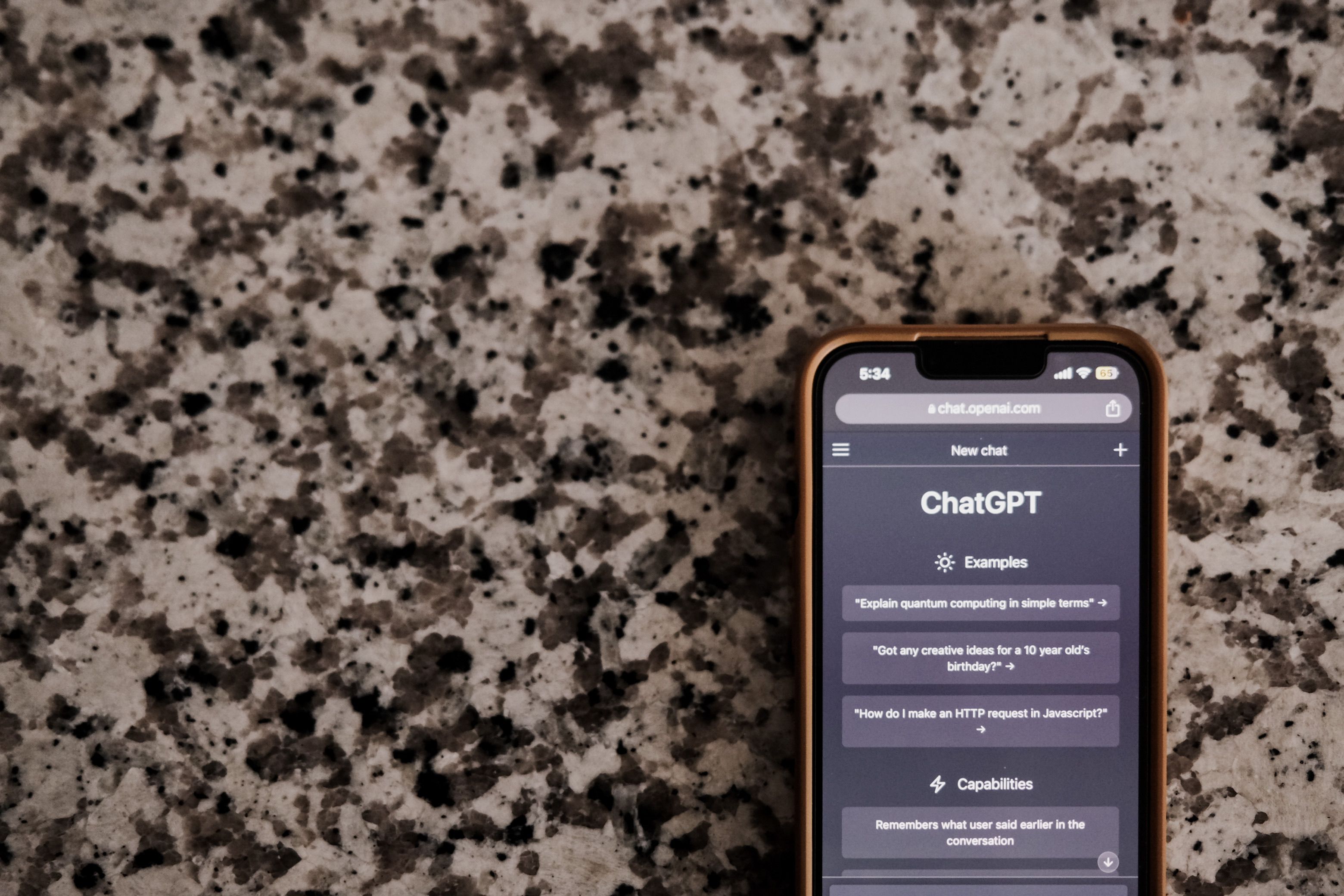
There’s still a free-answer corollary to picking just one: if you’re still not sure what specific bottleneck you’re solving for, ChatGPT — any chatbot running on OpenAI’s GPT-5.6 family — is the default choice — and the usage stats are why. As of February 2026, OpenAI passed 900 million weekly active users, more than twice the number from one year prior, making ChatGPT by far Earth’s most-used AI assistant, per OpenAI. That scale is possible because GPT-5.6 spans writing, research, file review, image generation, and voice from within one experience. For all the “I have a question and don’t know which app to open” moments that make up most of a founder’s day, it’s still the tool.
Best AI model for writing: Claude Fable 5
But when output quality actually matters — you know, the human who reads your mail matters! — and it has to go to a person who actually matters to your business (investors, clients, employees) the data leads to one winner. On AI testing firm BenchLM’s September 20 benchmarking round, Claude Fable 5 posted an Arena Elo rating of 15 08.5 (the highest human-preference score BenchLM tracks for any model) ahead of OpenAI’s own current flagship model, GPT-5.6 Sol. Arena Elo isn’t measuring mathematical correctness or code reliability — it’s the result of real people being shown two anonymous model responses and picking which they liked better. Which is about as close to “what’s the best AI for writing” as you can get without hiring those people yourself. If the deliverable is something a human has to read and respond to, believe, or work with, this category’s winner is the one to pick.
Best AI model for “speed”: Claude Haiku 4.5 and Gemini Flash- Lite
Latency wins keep awarding dual categories to two models working from the same family: Claude.ai’s Haiku 4.5 and Google’s Gemini Flash-Lite. “Efficient” here doesn’t refer to price — it refers to speed. Claude 4.5 and Gemini Flash-Lite are both sub-600 millisecond for time-to-first-token averages regardless of the prompt complexity, per QINQ’s September 2023 latency benchmark round. For comparison, frontier models like Claude Fable 5 or OpenAI’s GPT-5.6 Sol were measured over two seconds on complex prompts. If you care about your users having to wait real-time for a response — because it’s powering a chat widget, a live voice agent, or an in-app assistant — then this category, not the leaderboard, is where you shop.
Best value AI model for cost per task: DeepSeek V4 Flash
Finally, there’s the category that most founders pretend doesn’t exist until the billing cycle comes due. DeepSeek V4 Flash’s claimed rate is $0.14/million tokens for input and $0.28/million for generated output, per DeepSeek’s public API pricing site. (Google’s not public about Gemini pricing, but their lite-tier model, Gemini Flash-Lite, starts at $0.10/million tokens input.) Both are less than a third of what high-end models charge for mundane tasks like classification, summarization, and first draft content generation. Which is exactly the differential the CTO quoted earlier exploited with his own team — dropping the flagship model for high-volume mundane tasks in favor of a cheaper model, then only using the high-cost model for the tiny fraction of use cases where the extra “reasoning power” is needed. Most of what a startup pumps through AI doesn’t need the most advanced model. Using flagship-tier cost for baseline AI work is leaving money on the table.
Best AI model for code: Claude Fable 5
For this one category, every subtitle before it can go away. Generating code isn’t “mostly solved” in the same way chat responses or image generation are — software engineering tasks are where the gap between the best and the rest is both largest and easiest to quantify. Claude 5 scores 95% accuracy on SWE-bench Verified, the industry standard for real-world software engineering tasks, and 80% on the more difficult SWE-bench Pro round, the highest score published on that test by a significant margin, per BenchLM’s latest benchmark roundup from September 20. You can see Claude 5’s lead in this category manifest in the startup engineering tools it powers too: Claude 5’s immediate predecessor generation powers both Cursor and Windsurf, two of the three most-popular coding tools startup engineers use according to Waveup’s annual founder’s toolkit survey from 20.
Best AI model for advanced reasoning: Gemini 3.1 Pro
And for the last model award, we’re splitting categories just like we did with speed. For responsibilities that require actual, multi-step problem-solving abilities — market sizing, writing competitive logic, research you can’t just copy-paste from one publication to another — Google’s Gemini 3.1 Pro is the model to beat on actual measures of reasoning depth. Gemini 3.1 Pro scores 77.1% on ARC-AGI-2, one of two tests included in AI testing firm Artificial Analysis’ Reason Arena benchmark suite built specifically to minimize AI models’ ability to “game” the test with pure memorization. On Humanity’s Last Exam, another deep reasoning benchmark that’s notoriously difficult for AI models to score well on, Gemini 3.1 Pro earned a 46.4% mark, again one of the highest scores posted by any model on testing forums. Plus, Gemini’s API prices are Google’s cheapest among major public models, which is why it’s also known as the “value champion” of the frontier model tier in that same comparison.
Best image-generation AI model: OpenAI Image GPT 2
Image generation became a true competition in 2026, and OpenAI's GPT Image 2 is winning by a mile. Leading at #1 in the Artificial Analysis Image Arena with a rating of 1,339 as of Sep 2026 — said to be "the largest first-to-second place discrepancy the arena has ever seen" — it also ranks #1 on several other independent leaderboards. Its advantage comes from a "step of planning before rendering": GPT Image 2 plans out composition, then optionally searches web references before generating, which is why it also ranks highest on text-in-image accuracy, where most diffusion-based image models struggle. Google's Nano Banana Pro is currently the best competitor for 4K outputs and iteratively editing photos.
Best open-source AI model: LLAMA 4 Scout or DeepSeek OPT V4
Until we remember to update this guide, the best open-source model is either Meta’s Llama 4 Scout or AI startup DeepSeek’s DeepSeek OPT V4 . If you need to self-host, fine-tune on your own data, or avoid vendor lock-in completely, the open-source field has narrowed the quality gap with closed projects to near nothing on specific benchmarks while maintaining self-hosting options and lower per-token cost structures. With modifications on specialized chips like those from startup Cerebras, open-source models can even leave BigTech models in the dust on the speed front too: llama 4 Scout serves at over 2,600 tokens/second on the fastest chips, per benchmarking firm Fastio’s January 2023 speed test. Choose this category if your needs are data residency, fine-tuning on private data, or per-token pricing, over having the absolute highest scores in every benchmark.
No founder should pick just one
The common thread among founders who learned how to actually use AI at scale in 2023 wasn’t picking the single best model. It was learning not to ask that question. AI tools can only be as useful as the problems they’re applied to, so the founders who build the greatest value wind up being the ones who stop and ask: what specific task am I trying to solve for? And once you know that, most of these eight categories have a clear winner. Pick that model instead.